

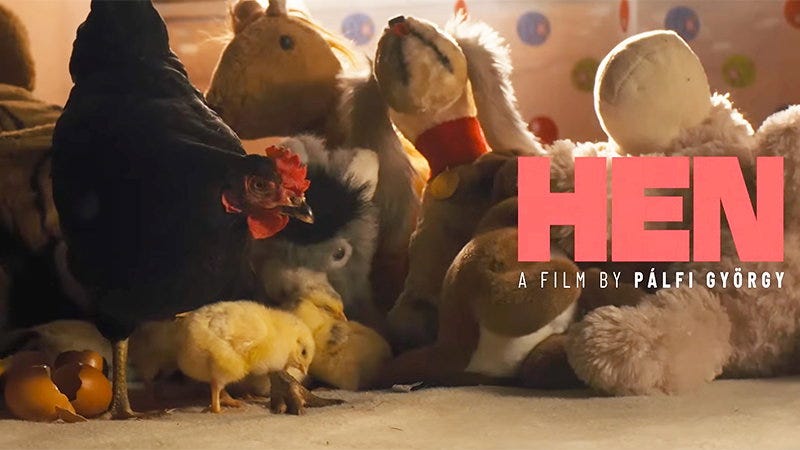
I recently watched the Hungarian film Hen. The images and story stayed with me. A hen escaping an industrial egg facility. The uncertainty of the outside world. The strange mixture of freedom and vulnerability. The feeling of moving through a landscape that wasn’t designed for her.
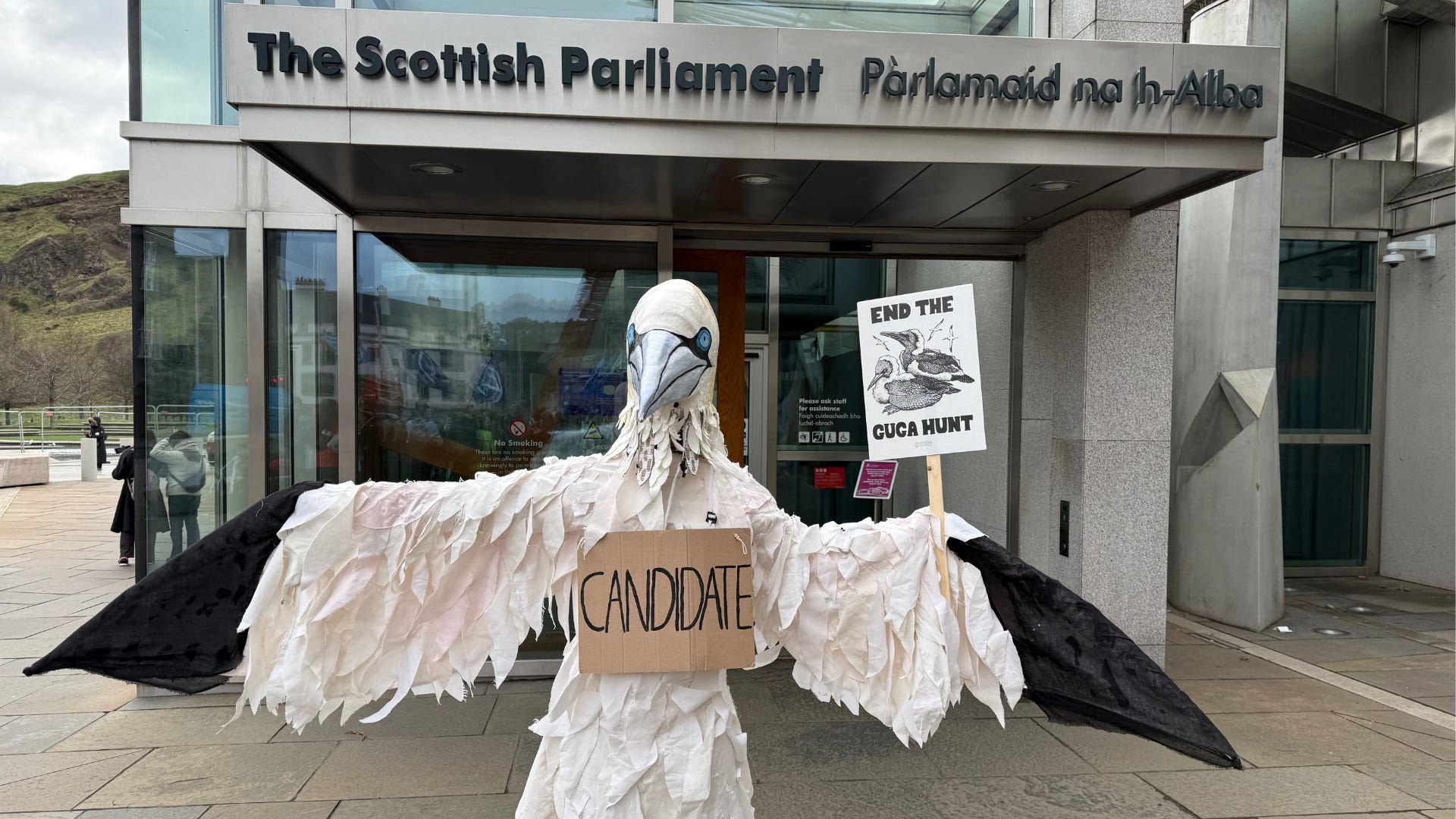
Around the same time, I’ve been following Protect the Wild’s election interventions . First came a guga campaigning against the annual guga hunt ahead of the Scottish elections. Then a fox appeared during the Makerfield by-election, drawing attention to fox hunting and generating a great amount of media attention.
At first these felt like entirely separate things.
One is a feature film. The other is political street theatre.
Yet the more I sat with them, the more they seemed connected by a question I hadn’t quite found the language for:
What does it mean for animals to appear politically?
Animals occupy a strange place in public life. They are constantly present in political discussions, yet rarely appear as political subjects themselves. Their lives are shaped by legislation, planning decisions, subsidies, trade agreements, conservation policies, farming regulations, and cultural traditions. Entire industries exist because of decisions made about them. Yet when animals enter public debate, they often arrive as issues to be managed rather than as beings whose interests are being negotiated.
A fox becomes a discussion about hunting.
A hen becomes a discussion about food production.
A gannet becomes a discussion about tradition.
The animal itself tends to slip quietly from view.
What struck me about both Hen and Protect the Wild’s interventions is that they seem, in very different ways, to push back against this disappearance.
Hen was determined to remain close to the nonhuman animal. That sounds obvious, but I think it’s surprisingly rare.
Animal stories have a habit of becoming human stories. Animals become mirrors through which we examine ourselves. They become metaphors, symbols, lessons, and reflections. We learn something about humanity through them, but often lose sight of the animal along the way.
Hen largely resists that pull.
The film follows a hen escaping confinement and entering a world that is neither idyllic nor safe. There are predators. Roads. Humans. Weather. At one point the narrative intersects with a seafood restaurant involved in people smuggling, creating an intriguing parallel between different forms of vulnerability and exploitation. Yet the film never insists that the hen’s experience is equivalent to the human stories unfolding around her. Instead, it allows them to exist alongside one another.
I found that restraint refreshing.
There is a patience to the film that feels unusual. We spend time with the hen. We move through landscapes with her. We encounter danger alongside her. The camera remains remarkably committed to her physical experience of the world.
At points I wished the film trusted its animality even more. Certain moments involving the cockerel and some of the hens drifted towards explanations rooted in personality or attractiveness. The social outcasts, the injured birds, the less conventionally appealing characters occasionally seemed framed through individual traits when the realities of breeding, confinement, injury, and industrial production felt more significant. These birds are living with the consequences of systems, not simply the consequences of character.
Yet perhaps that tension is unavoidable.
Any attempt to represent a nonhuman animal life involves a negotiation between distance and intimacy. Audiences need enough proximity to care, but too much human projection risks overwhelming the animal altogether.
What I admired was that Hen never fully surrendered to allegory. The hen remains stubbornly, awkwardly, insistently nonhuman animal throughout. Especially with her relationship with her eggs, that kept being taken or destroyed.
In Zoopolis, the influential work by Sue Donaldson and Will Kymlicka, one of the ideas that stayed with me is their argument that animals are not somehow outside politics. They are already deeply entangled within political life. Their bodies, habitats, movements, reproduction, and deaths are shaped by political decisions every day.
The issue is not that animals are absent from politics.
The issue is that they remain largely absent from representation.
That thought helped me understand why Hen and Protect the Wild’s election interventions have been circling one another in my mind.
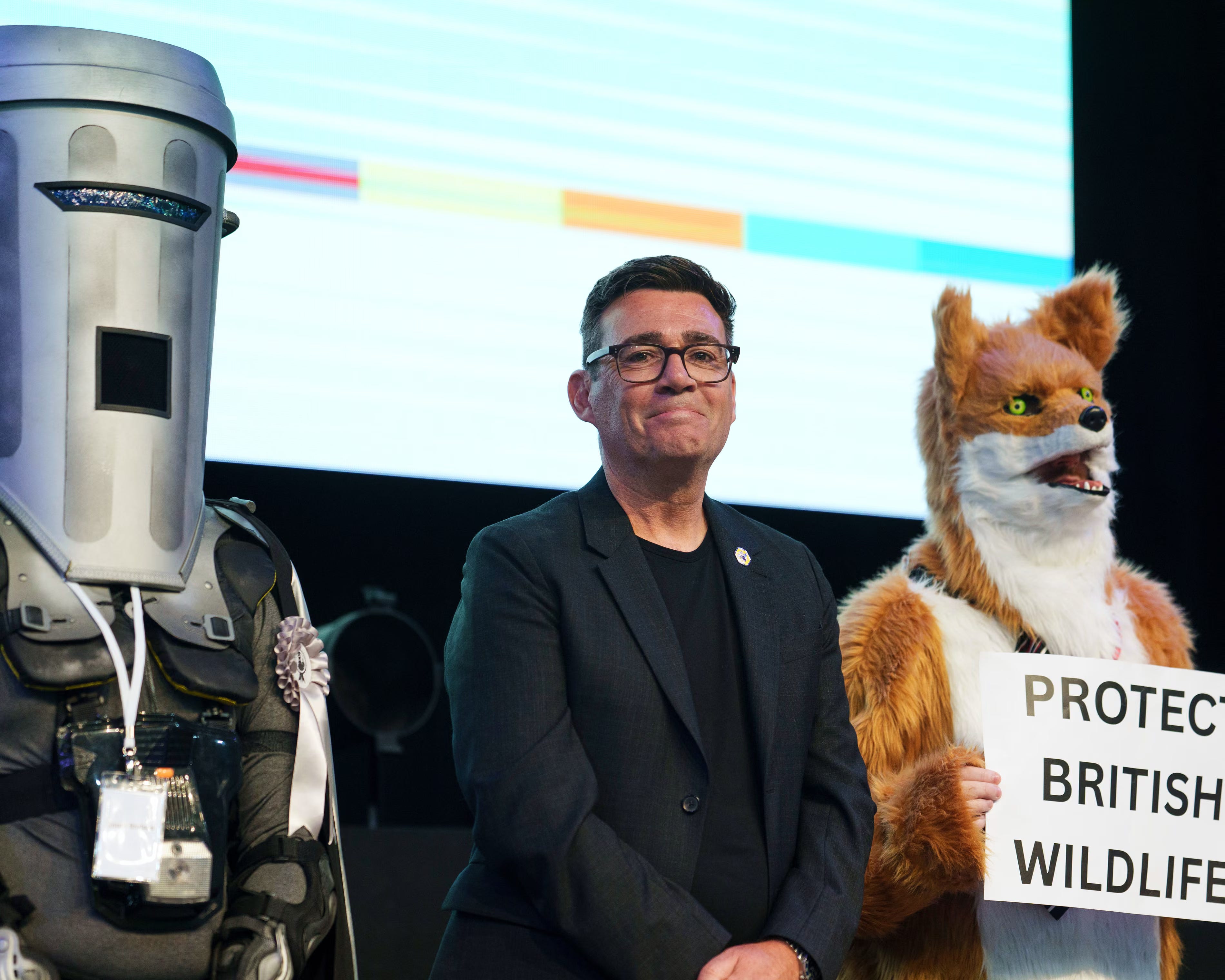
When Protect the Wild’s Rob Pownall appears dressed as a guga and a fox, the immediate reaction is often laughter. There is something undeniably absurd about a seabird participating in an election campaign or a fox appearing alongside politicians and candidates. The images are strange enough to disrupt the normal rhythms of political communication. They are designed to be.
Yet I found myself feeling slightly uneasy about my own amusement.
Because the issues underneath these performances are serious. Fox hunting remains a source of immense suffering. The annual guga hunt remains largely invisible outside Scotland. The lives at the centre of these campaigns are not comedic, even when the performances themselves invite humour.
The tension lies in the fact that the absurdity seems to be doing two things simultaneously.
There is always the possibility that the costume becomes the story. The intervention risks being dismissed as a stunt. The nonhuman animal risks becoming a novelty. Watching clips of these performances being discussed on programmes such as Have I Got News For You, I could feel that tension immediately. The laughter arrived before the context.
At the same time, the very absurdity that risks trivialising the issue is often what makes the issue visible in the first place.
Without the costume, there may be no conversation.
Without the interruption, there may be no coverage.
Without the absurdity, many people may never encounter the issue at all.
This is where I find myself returning to Mikhail Bakhtin’s concept of the carnivalesque. For Bakhtin, carnival temporarily suspends the normal rules of social life. Hierarchies are inverted. Fools become kings. Authority is mocked. The familiar order is disrupted through humour, excess, and play. Importantly, carnival is not separate from politics. It creates a space where political assumptions can be questioned precisely because they are rendered strange.
The fox and the guga seem to operate in a similar register. Their appearance in electoral politics is deliberately absurd. They do not seek legitimacy through conventional political performance. Instead, they expose a contradiction through humour. Animals are profoundly affected by political decisions, yet remain almost entirely absent from political representation. By placing a fox or a guga within the frame of an election campaign, the performance briefly inverts that reality.
For a moment, the nonhuman animal enters a space where it is usually absent. Journalists ask questions. Politicians respond. Audiences become curious. People who have never heard of guga hunting suddenly discover it exists. People who have never reflected on fox hunting beyond familiar political talking points find themselves looking again.
The laughter remains. The risk of trivialisation remains. Yet Bakhtin reminds us that laughter can be politically productive. Sometimes the joke is not a distraction from the issue. Sometimes it is the vehicle through which the issue becomes visible.
Performance creates a rupture.
And perhaps that rupture is doing something more significant than it first appears.
A sad note
Before I go, I wanted to take a moment to acknowledge some news that has left me feeling both grateful and a little sad.
I’ve written about the Garlinge Theatre in this newsletter and had the pleasure of speaking with its founder and directors Aly and Terry on the podcast. Through their leadership, the theatre became something genuinely unique: a space where creativity, community, compassion, and vegan values were not treated as separate concerns but woven together into the fabric of the organisation.
Aly and Terry are now moving on from the theatre. With that change comes the end of Garlinge’s chapter as a vegan theatre, something that feels particularly significant given how rare such spaces are within the arts.
I’ve been fortunate enough to witness the care, imagination, and generosity they brought to the venue. They nurtured artists, welcomed activists, created opportunities for emerging voices, and demonstrated that a theatre can be guided by ethical principles without sacrificing ambition, quality, or joy.
At a time when so many cultural institutions are struggling simply to survive, they showed what it might look like to build a venue around values as well as artistic vision.
Their influence extends far beyond the productions staged on its floors. It lives on in the communities they helped foster, the artists they supported, and the countless conversations they made possible.
While I am saddened to see this chapter come to a close, I am enormously grateful for everything they have contributed, both to the arts and to the wider movement for social change.
Thank you, Aly and Terry, for your vision, your courage, and your commitment to creating a space where creativity and compassion could flourish side by side.
Looking ahead
Next weekend I’ll be in Switzerland for the Arten Festival at animal sanctuary Hof Narr, a fascinating gathering of artists, activists, sanctuary residents, and audiences exploring what more-than-human coexistence might look like through art, performance, music, literature, and installation. The festival is built around the question of how humans and other animals might meet as equals, with performances and artworks taking place throughout the sanctuary itself.
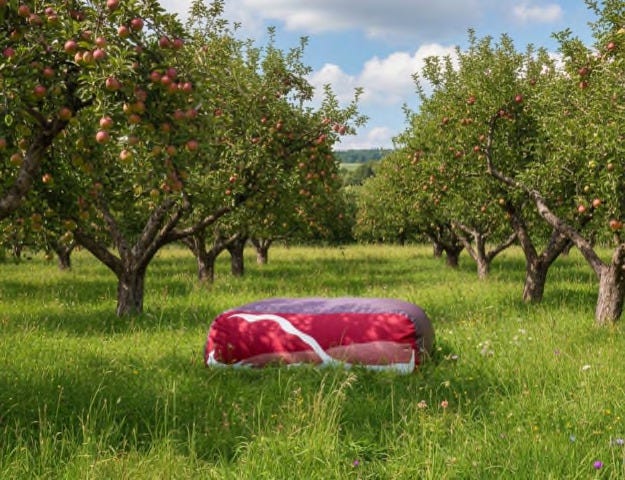
I’ll be collaborating with wonderful scenographer and costume designer Theres Indermaur on an interactive installation called Before It Arrives: A gentler world is being imagined. Centred around a large inflatable bacon sculpture, the installation invites visitors to draw, paint, write, and imagine together, transforming a symbol of consumption into a collective space for reflection, play, and possibility. Over the course of the festival, the work will evolve through the contributions of the public, becoming a shared artwork shaped by many hands and many imaginations.
The festival itself is curated by the wonderful Daniel Hellmann, whose work many readers will know from previous newsletters and podcast conversations. Bringing together artists, activists, writers, performers, musicians, and sanctuary residents, it feels like one of the most exciting spaces currently exploring the relationship between art and nonhuman animals.
If you happen to be in Switzerland next weekend, please do come along.
After that, I’m hoping on the night train to Lithuania to present at the XIII World Congress of the International University Theatre Association. I’ll share my presentation once back!
Who speaks for the animals? It really is a big question, and when you start thinking about it, it almost immediately makes you sad, because the answer is: very few people do.
When I was young and traveling around a bit, I once ended up in a small, remote village in the Peruvian Amazon. There I took part in some nighttime ayahuasca rituals. After one of those nights, the local shaman said to me, “Brother Ayahuasca tells me that you are now the brother of our dead.”
I asked him what he meant by that.
“You can now speak for them,” he said.
At the time, I was just a happy young man and did not think too much about it. But later the idea came back to me and began to fascinate me: is it possible for someone to speak for those who have no voice that people can hear and understand?
My tentative answer is yes. But it is a huge responsibility, because you have to truly understand what is good for them. It may be different from what is good for you, but you still have to say it out loud.
In fact, I think we should have official Speakers for Animals, people whose job would be to represent them in different official contexts. Maybe we should also have speakers for lakes and forests — some kind of ombudsmen or ombudswomen whose words would be given special weight and attention.
But knowing how much nonsense people say in this world with complete confidence, it would be very hard to find the right people for such roles. They would have to take the task seriously, without human misconceptions, bias, or ideological fanaticism. They would have to speak as plainly and truthfully as possible, with deep understanding of, and empathy for, the voiceless.