

Hi there,
Lately I’ve been thinking a lot about puppets. Specifically, about the use of puppetry in animal rights performance and environmental spectacle. What does it mean to perform a nonhuman animal? What kind of connection is created when a human manipulates a figure to represent a nonhuman life?
In both grassroots activism and large-scale public art, puppets are playing an increasingly visible role. From handmade cows and chickens in street theatre protests to international projects like The Herd, these symbolic bodies raise important questions about ethics, aesthetics, and species hierarchy.
So, can puppets help the animal rights movement?
Why puppets?
Puppets offer a unique space in performance. They are animated but not alive, embodied but not sentient. As scholar Jennifer Parker-Starbuck notes in her work on becoming-animate, puppets allow for powerful representations of nonhuman animals without relying on live animals for entertainment or exploitation.
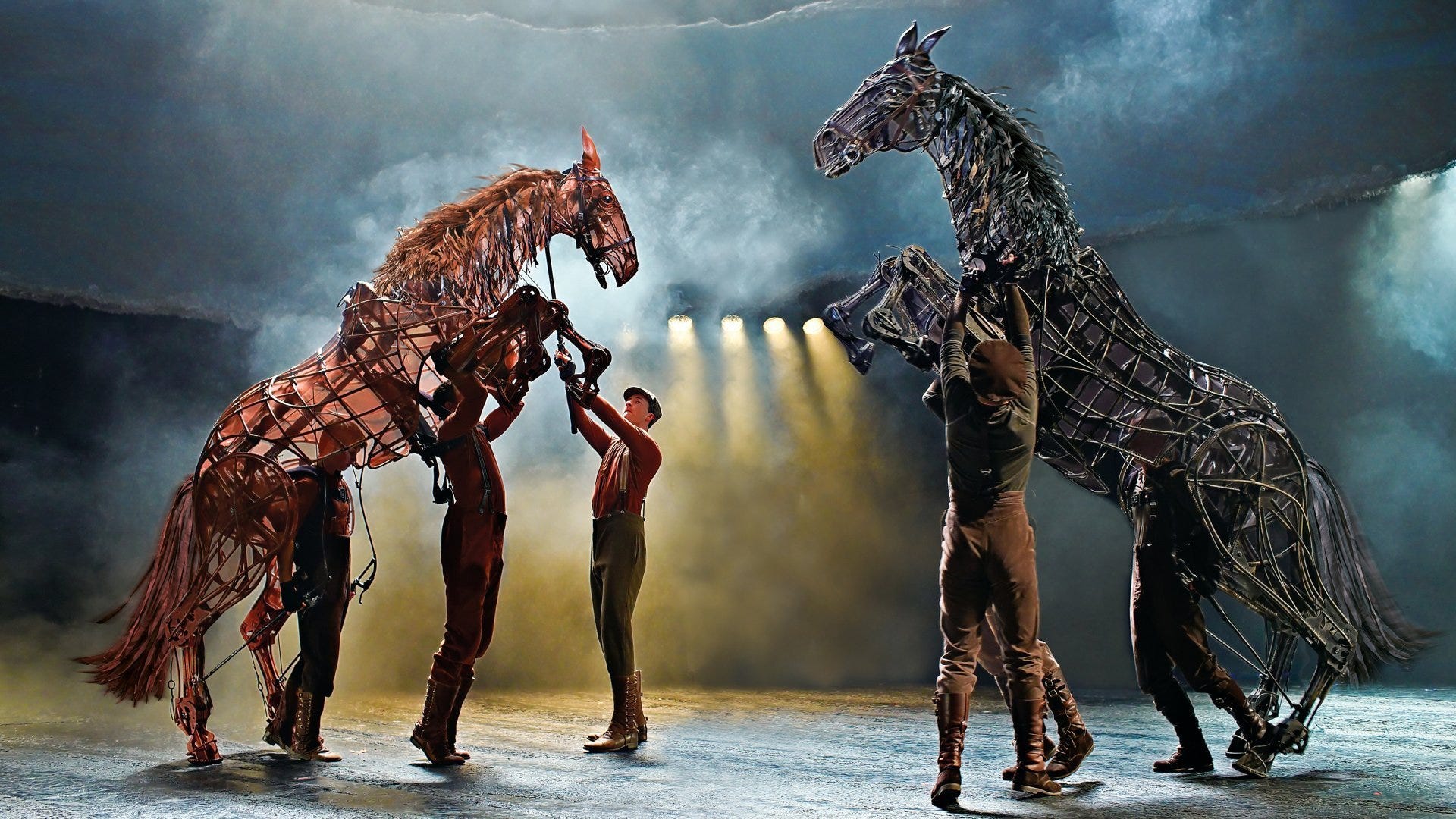
This creates a rare ethical opening. Puppets can invite empathy, stir reflection, and offer audiences a connection to animality that is both imaginative and affective. The famous horse puppets in War Horse, for example, are not just props. They are emotionally charged presences, crafted and operated in ways that highlight movement, breath, and vulnerability. The audience engages not with a literal horse, but with the idea of one.
In activist contexts, this is powerful. Puppets become ethical stand-ins, suggesting rather than simulating, and opening space for interspecies consideration.
What performance adds
Puppets work especially well when paired with live performance. There is something intimate and visible about the human–puppet relationship. The manipulation is not hidden; it becomes part of the meaning.
In activist theatre or public protest, puppets can:
make the invisible visible, particularly the often-overlooked lives of farmed animals,
draw attention through size, colour, and movement,
evoke a sense of play that lowers defensiveness while opening emotional space,
create striking juxtapositions; such as a giant chicken puppet moving silently through a noisy city street.
As with activist music or the grief-led processions of slaughterhouse vigils, puppetry invites audiences to feel rather than only think.
Puppets can also be used to explore trauma, both human and nonhuman. In 2019, I took part in a workshop titled Puppet Making for Use in Healing Self-Concept, which focused on trauma-informed educational practice. Although the emphasis was on children and self-identity, the principles were strikingly relevant to interspecies advocacy.
Puppetry can hold and express trauma without re-enacting it. For animals whose suffering is either invisible or abstract to audiences, the puppet becomes a body that carries grief, memory, and rupture in ways that are symbolically powerful. In this sense, puppetry is not just storytelling; it is a form of trauma translation, allowing us to bear witness across species lines.
But whose story is being told?
Despite this potential, puppetry also comes with risks.
Poor design or sentimentality can trivialise suffering.
Overly anthropomorphic characterisation might reinforce human dominance rather than challenge it.
Choosing which animals to represent often reinforces existing species hierarchies.
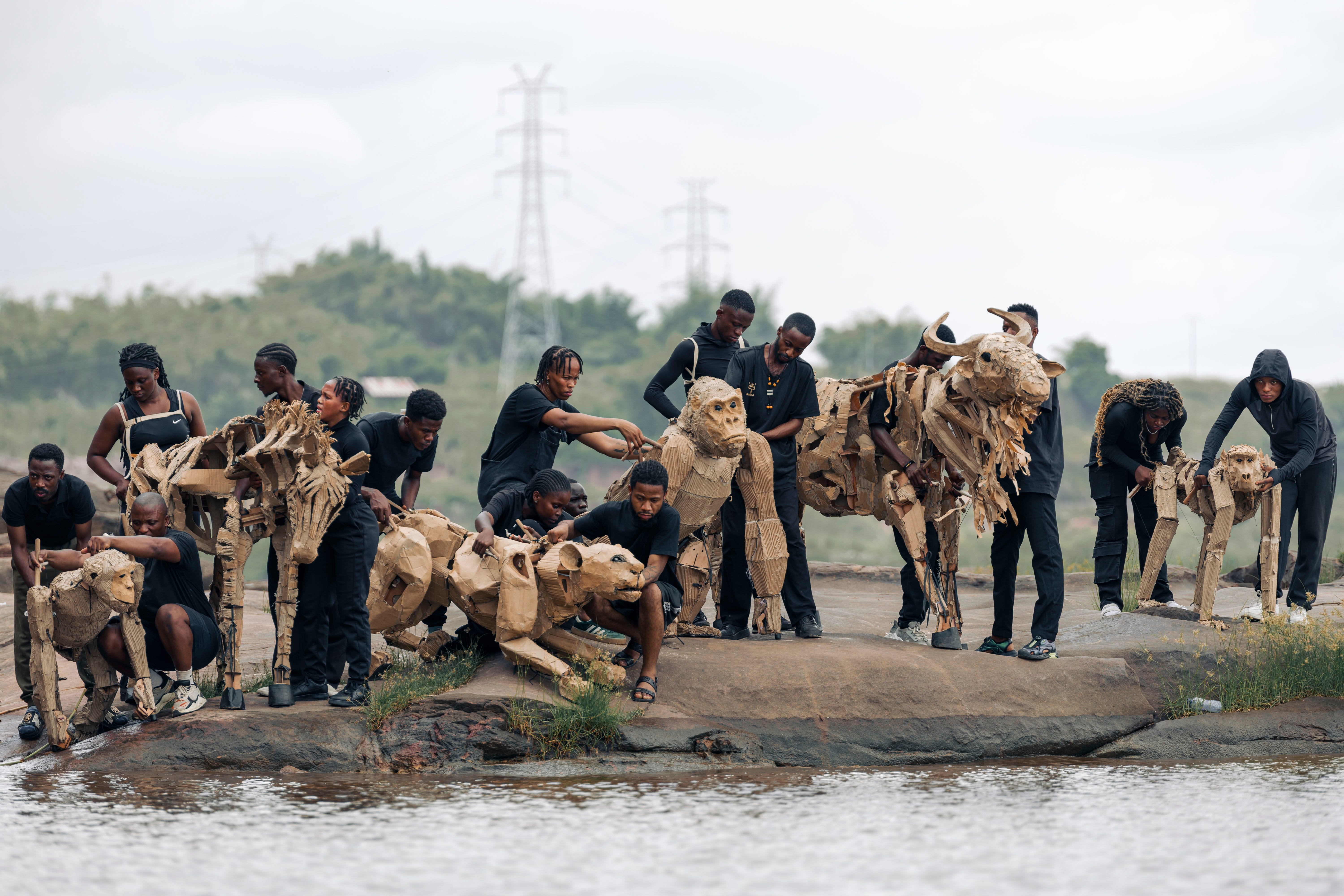
This last point is especially important. Projects like The Herd are breathtaking in scale. From April to August 2025, life-sized puppet animals are travelling 20,000km from the Congo Basin to the Arctic Circle, symbolising their flight from climate crisis. The project is visually arresting, politically motivated, and poised to reach millions.
But it also plays into a familiar conservationist aesthetic, one focused on charismatic megafauna. Elephants, big cats, monkeys. The animals that are already seen and already symbolic.
This is not a critique of The Herd as a project; it is a reminder of the broader pattern. When nonhuman animal performance aligns closely with climate storytelling, there is often a subtle sidestepping of industrial animal agriculture, fish farms, or species deemed less “noble.” The system is speciesist by design; our representations must not uncritically reproduce that logic.
Where Zooclasm comes in
This is where I hope the development of my concept of Zooclasm can help. As a framework, it challenges the structural and symbolic systems that keep animals categorised, aestheticised, and controlled. It asks:
What needs to break for us to truly centre the nonhuman in public space?
How can performance resist the neatness of narrative and instead make room for rupture?
Can a puppet nonhuman animal ever stand in for a nonhuman animal’s perspective, or only ever reflect ours?
Zooclasm invites mess. It invites contradiction. And it encourages performances that are not just about nonhuman animals, but are with them in some imaginative, affective sense.
A puppet of a fox, led in silence by a saboteur through a street of shoppers, might do this. A grieving puppet of a hen, seated on a plastic crate outside a supermarket, might do this. Not because they represent animals perfectly, but because they trouble the human gaze.
Moving forward: puppets as potential
Puppetry can be a potent form of artivism, when it resists spectacle for spectacle’s sake and asks deeper questions about whose stories we tell, how we tell them, and what ethical frameworks guide the telling.
Used with care, puppets can:
evoke kinship without sentimentalism,
offer symbolic weight without erasure,
critique power without collapsing into parody.
They are not the answer, but they are a tool. Like performance itself, puppetry thrives in the in-between; between seen and unseen, human and nonhuman, voice and silence.
As we navigate the spaces between abolitionism and imagination, between campaign and ritual, between ethics and aesthetics, the puppet stands as a reminder. There is power in presence, even when that presence is made of sticks and cloth and breath.
And sometimes, that is enough to begin.
With care,
Ben
🔗 Learn more: