

I’ve become a bit obsessed with Discofoot.
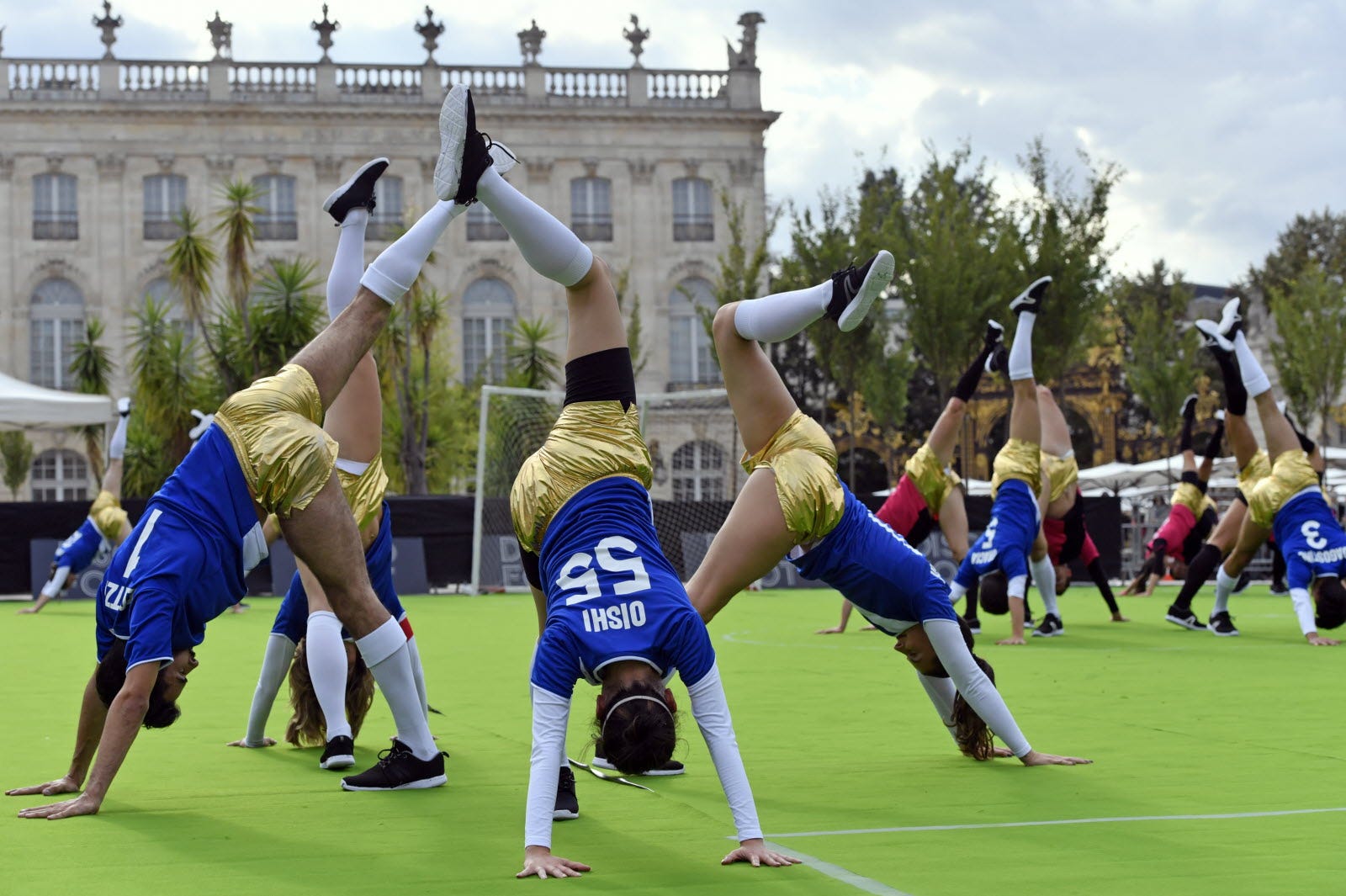
A choreographed collision between football and dance, where the rules of the game are twisted, loosened, and reimagined through disco, improvisation, and play. It’s chaotic, joyful, slightly absurd, and completely disarming.
As someone who grew up around football and then found their way into theatre, it hits something quite specific. It takes a space that feels deeply coded; competitive, serious, masculine, and opens it up. Bodies move differently. The stakes shift. The whole thing becomes something else.
And I can’t stop thinking about what that kind of intervention might mean elsewhere.
Particularly in the animal rights movement.
The masculinity of meat
The more I sit with it, the more I feel how deeply hypermasculine the logic of animal exploitation is.
Control. Efficiency. Extraction.
Bodies reduced to output.
Violence hidden behind systems, language, and scale.
Industrial animal agriculture doesn’t just function economically. It performs a worldview. One built on dominance, hierarchy, and the right to consume.
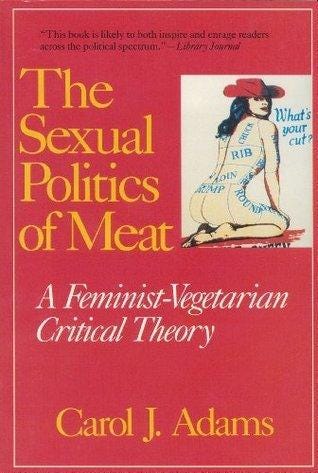
Carol J. Adams’ The Sexual Politics of Meat traced this decades ago, mapping the connections between meat, masculinity, and power. To eat animals is not just to consume, but to perform a certain kind of identity.
Rational. Strong. Entitled.
And the animal, in contrast, becomes object. Fragment. Resource.
Disrupting the tone
This is where Discofoot keeps pulling me back.
Because it shows how easily a space can be re-coded.
Football, one of the most culturally masculine arenas, becomes playful, fluid, unpredictable. The seriousness dissolves. The body becomes expressive rather than instrumental.
So I keep asking:
What would it mean to bring that same energy into animal advocacy?
To disrupt not just the message, but the tone of the movement?
Queering the field
We already have strong strands of this.
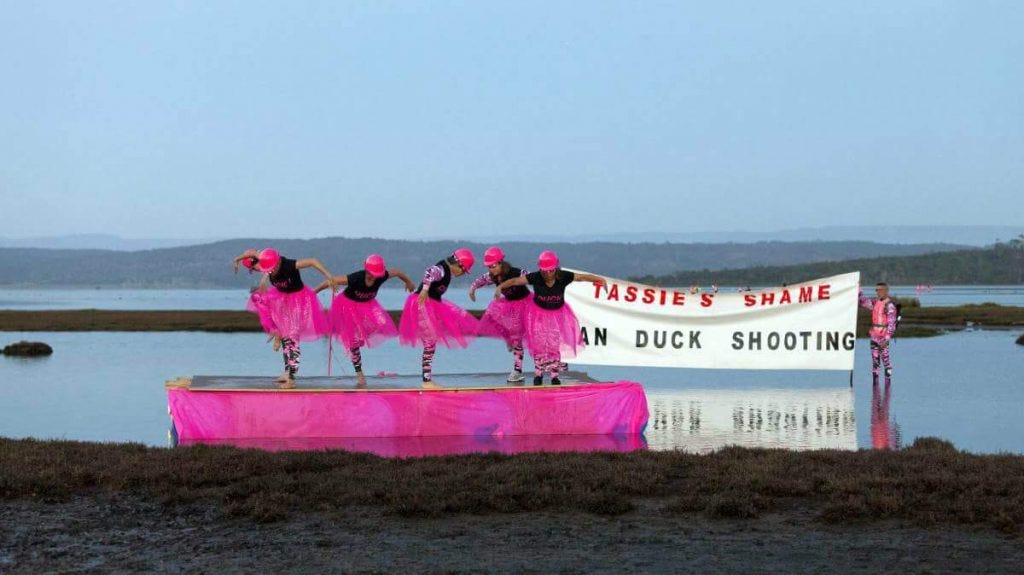
Daniel Hellmann’s Soya the Cow blurs drag, animality, and queerness into something that resists easy categorisation. Yvette Watt’s Duck Lake unsettles classical form and repositions the animal body within it, and places it into the hypermasculine space of a real duck hunt. The Queer Vegan Manifesto by Rasmus Rahbek Simonsen, pushes us to think about how identity, consumption, and normativity intersect.
These works don’t just critique systems. They destabilise them.
They refuse to meet power on its own terms.
Imagining new interventions
I keep coming back to the possibilities.
Not as spectacle for its own sake, but as intentional disruption.
What if:
A hunt sab group performed in drag, exaggerating and subverting the rituals of the hunt
A queer dance intervention appeared outside a butcher’s shop, disorienting rather than confronting
Activist spaces embraced choreography, costume, and camp as part of their repertoire
These are not just aesthetic shifts. They change the emotional register of activism.
They open up space for:
curiosity instead of defensiveness
play instead of rigidity
participation instead of opposition
Pleasure as resistance
There is something deeply unsettling, for dominant systems, about pleasure that cannot be controlled.
Joy that is collective.
Bodies that move freely.
Identities that refuse to stabilise.
In that sense, queerness and animal liberation share a common tension.
Both resist the idea that bodies exist to be disciplined, categorised, and used.
So what happens when activism doesn’t just expose harm, but embodies an alternative?
Not just showing what is wrong, but performing what could be different.
A note of caution
Of course, this isn’t without its risks.
There is always the possibility of:
trivialising suffering
being dismissed as unserious
alienating audiences expecting more conventional forms
And there remains the ethical question of representation, how to centre nonhuman animals without speaking over them.
But perhaps the greater risk is staying within the same tonal boundaries.
Final provocation
Does the movement need to make more space for:
play
pleasure
queerness
performance that resists categorisation?
Because if domination is performed, then it can be unperformed.
And sometimes, that might not look like protest as we know it.
It might look like a dance floor appearing where it shouldn’t.