

Before getting into this week’s reflections, I wanted to share a milestone:
Performing Animal Rights has reached 100 subscribers!
It’s genuinely lovely to see this space growing. What began as somewhere to share my thoughts and explorations around performance and animal advocacy has already led to some wonderful connections with artists, researchers and advocates. That’s perhaps been the most rewarding part of writing these newsletters, discovering people approaching similar questions from different directions and having conversations that send my own thinking somewhere unexpected. So thank you for reading, sharing and engaging. And please do reach out if anything here resonates with you. I’d love to hear what you’re working on, exchange ideas or simply continue the conversation.
Rather appropriately, this week’s reflection concerns connection itself.
I’ve recently been participating in the Oxford Critical Animal Studies reading group, where our discussions around multispecies kinship have prompted me to revisit a question that has occupied much of my research: how might we cultivate meaningful connections with other animals whose experiences we cannot fully understand?
It’s a familiar philosophical difficulty, but one that becomes particularly interesting through the performing arts. Theatre and dance frequently ask us to move, sense, imagine and respond in unfamiliar ways, sometimes producing experiences that resist straightforward intellectual explanation.
Perhaps connection is not always something we arrive at through knowledge. Perhaps it is also something we experience through our bodies.
What does it mean to know another animal?
In 1974, philosopher Thomas Nagel posed a question that has become something of a cornerstone in discussions of animal consciousness: What is it like to be a bat?
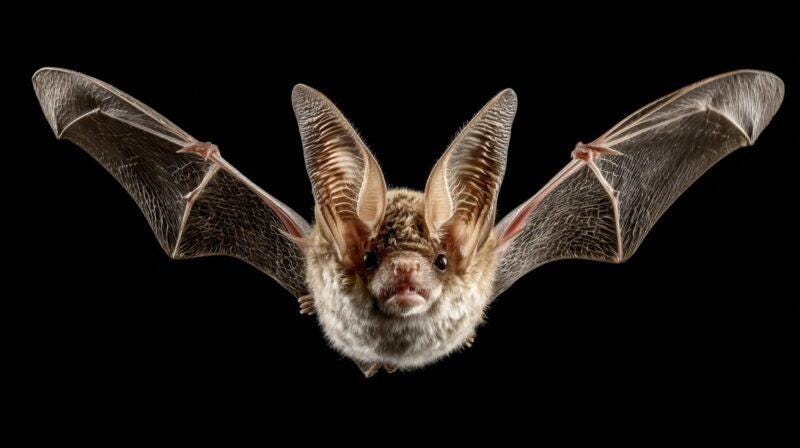
Nagel’s argument concerned the subjective nature of experience. A bat’s sensory world, particularly its capacity for echolocation, differs so substantially from our own that even the most imaginative human cannot simply occupy its perspective. We might understand how echolocation works, but knowing its biological mechanisms is not equivalent to experiencing the world through it.
This presents an interesting challenge for artistic representation. Performance frequently invites us to imagine unfamiliar experiences, and actors are often celebrated for inhabiting perspectives beyond their own. Yet there are limits to what imagination can reasonably claim to accomplish, particularly when representing another species.
However, I wonder whether the ambition to understand another animal might sometimes distract us from other ways of relating to them.
This question resurfaced during our reading group through Stephanie Erev’s 2018 article, What Is It Like to Become a Bat? Heterogeneities in an Age of Extinction. Erev revisits Nagel’s philosophical encounter, but approaches species difference through becoming, bodily experience and relationships extending beyond conscious awareness.
What interests me is her resistance to the idea that difference necessarily produces separation. The fact that I cannot experience the world exactly as a bat does not mean our existences are entirely disconnected, nor that meaningful relationships require us to overcome every difference between us.
Drawing on process philosophy, particularly Alfred North Whitehead and Brian Massumi, Erev challenges our understanding of ourselves as self-contained individuals. Our bodies continuously participate in processes of sensation, responsiveness and environmental interaction that extend beyond conscious perception.
If our bodies are already involved in relationships that exceed conscious understanding, perhaps meaningful connection does not always depend upon knowing another individual’s subjective experience.
And perhaps artistic practice can help us explore what that might feel like.
The body knows more than we think
One of Erev’s most intriguing discussions concerns the relationship between conscious perception and the wider processes through which bodies encounter their environments.
She draws upon research demonstrating that octopus skin can respond directly to changing intensities of light without relying upon the animal’s eyes. Related research into light-sensitive processes in human skin offers another example of bodily responsiveness occurring beyond conscious visual perception.
These examples complicate our familiar understanding of the body as something directed entirely by a conscious mind. Erev develops this through the concept of ecotones of experience. Borrowing from ecology, where an ecotone describes a transitional region between environments, she imagines bodily existence through zones in which the distinction between self and world becomes less definite.
I find this particularly compelling because it challenges the assumption that connection must involve two clearly bounded individuals reaching towards one another. Our bodies are already materially involved with their environments, responding to conditions that may never enter conscious awareness.
While reading the article outside in the summer sunshine, with my dog Freya beside me, I felt something of this quite profoundly. The warmth of the sun brought a wonderful sense of comfort as I closed my eyes and surrendered to the moment. When I opened them again, I looked towards Freya, whose eyes were just beginning to open from what appeared to be a similarly blissful state. It was a small but rather beautiful moment of shared existence, between human me, dog Freya and that celestial presence, the Sun.


Of course, I cannot know that Freya experienced the moment as I did. Nor does biological responsiveness automatically equate to subjective feeling or meaningful social connection. Yet perhaps that uncertainty is part of what makes such encounters interesting. We were two very different animals, responding to the same environment through different bodies, sharing a moment without needing to understand one another’s experience completely.
This brings me back to the performing arts.
Within theatre and dance, the body is not simply an instrument through which pre-existing thoughts are communicated. It can also become a means through which experiences and relationships are discovered. A performer moving through unfamiliar space, responding to another person’s weight or adjusting their movement to a changing rhythm may encounter sensations that emerge before their significance is consciously understood.
Perhaps this is one of the distinctive possibilities of physical performance. Rather than simply representing an idea about connection, it can create circumstances in which connection becomes something materially experienced.
Moving before understanding: Rudolf Laban
When thinking about movement and experience, I find myself returning to Rudolf Laban, whose influence on modern dance, movement analysis and physical theatre remains substantial.
Laban approached movement not simply as a collection of actions, but as a dynamic relationship between the body and the conditions through which it moves. His theories provide a vocabulary for investigating how ordinary actions acquire different expressive possibilities through changes in weight, timing, spatial attention and flow.
Within his Effort framework, movement is explored through four interrelated factors: Weight, Time, Space and Flow. These concern not only what the body does, but how it performs an action. A movement might be strong or light, sudden or sustained, direct or indirect, bound or free. Even a simple gesture, such as reaching towards something, can become an entirely different physical experience depending upon the qualities through which it is performed.


I’ve always found this particularly useful within actor training because it encourages performers to move beyond illustrating emotions through familiar gestures. Rather than deciding that a character is frightened and attempting to demonstrate fear, an actor might explore what happens when movement becomes suddenly bound, indirect or unusually light. Sensation and expression can emerge through experimentation, sometimes producing discoveries that would not have occurred through psychological interpretation alone.
What interests me now is considering these explorations beyond the familiar boundaries of human character and theatrical representation.
Weight, gravity, rhythm, resistance and spatial negotiation are not exclusively human concerns. Other animals also move through environments offering opportunities, constraints and changing conditions. Their bodies respond to terrain, pressure, momentum and the presence of others, although these relationships will be experienced differently across species.
A performer exploring weight is not reproducing another animal’s experience of gravity. Nor does experimenting with spatial movement grant access to the perceptual world of a bird, cow or bat. Yet such exercises draw attention to physical relationships extending beyond the cultural distinctions through which we ordinarily separate ourselves from other animals.
Crucially, this exploration does not require imitation.
Rather than asking an actor to move like another animal, we might invite them to investigate unfamiliar relationships with their own weight, balance and surrounding space. What happens when a familiar movement becomes extraordinarily sustained? How does the body respond when its usual spatial habits are interrupted? What possibilities emerge when performers become less concerned with communicating a predetermined meaning and more attentive to the physical experience itself?
Perhaps the performer does not need to become another species to encounter something of the shared physical conditions of animal existence. They might instead become more attentive to the bodily relationships through which their own experience unfolds.
The objective is not to discover a universal animal experience that erases species differences. It is to consider whether movement might make certain forms of continuity more perceptible while allowing those differences to remain.
The possibilities of play
This brings me to another aspect of performance that deserves greater attention: play.
Within theatrical improvisation, play can generate unexpected relationships, challenge habitual responses and create possibilities that would be difficult to anticipate through conscious planning alone. Performers respond to movements, sounds and situations as they emerge, allowing an encounter to influence what becomes possible.
There is something particularly interesting about this uncertainty. Rather than executing a predetermined intention, performers enter relationships in which their actions are continually shaped by others. This does not mean abandoning conscious thought, but allowing meaning to emerge through participation rather than requiring it to be established beforehand.
Brian Massumi’s What Animals Teach Us About Politics provides a useful philosophical connection. Massumi considers play as a creative activity through which established patterns of behaviour can be varied and transformed. His thinking challenges rigid divisions between human and nonhuman life, approaching differences through capacities, activities and processes of becoming rather than fixed identities alone.
What interests me is whether artistic play might allow us to encounter forms of connectedness that do not begin with intellectual identification.
Physical improvisation can involve anticipating another person’s movements, adjusting to their rhythm, responding to contact or negotiating space without continually translating those experiences into language. A relationship emerges through the activity itself.
There are interesting parallels with how humans interact with other animals. Anyone who has developed close relationships with animals will recognise that communication often involves more than interpreting signals. There are rhythms of interaction, moments of anticipation, bodily adjustments, invitations to play and responses that acquire meaning through repeated encounters.
This does not mean theatrical improvisation and nonhuman animal play are equivalent. Their motivations, social functions and experiences cannot simply be collapsed into a shared category. But perhaps artistic play offers a way of reconsidering our assumption that meaningful relationships must always be mediated through familiar forms of human understanding.
In improvisation, we frequently discover what an encounter means through participation rather than prior explanation.
Might something similar be possible in our relationships with other animals?
Feeling connected is not the same as caring
There is, however, a complication we should take seriously.
Feeling connected to another animal does not necessarily mean respecting their interests, recognising their autonomy or acting in ways that support their flourishing.
Indeed, some of the most exploitative relationships humans maintain with other species are accompanied by powerful narratives of affection and familiarity. People can feel deeply connected to animals while participating in institutions that restrict their movement, regulate their reproduction or determine the circumstances of their deaths.
Connection, in other words, is not automatically liberatory.
This matters when considering the political possibilities of artistic practice. A physical performance might generate an intense sense of unity, vulnerability or shared existence without challenging the material arrangements through which animals are exploited.
Erev’s discussion of heterogeneous encounters offers a useful complication. She resists imagining interconnection as necessarily harmonious, emphasising that relationships between different forms of life can produce suffering and destruction as well as creative transformation.
Recognising our entanglement with other animals is therefore only part of the challenge. We must also consider what kinds of relationships those entanglements produce, whose interests they serve and how they might change.
For the performing arts, this suggests that creating an experience of connectedness should not become an end in itself. A workshop inviting participants to explore shared bodily vulnerability might open possibilities for ethical reflection, but we cannot assume that unfamiliar physical sensations will translate into greater concern for another species.
Equally, not every artistic experience should be required to produce an immediately measurable political outcome. The value of performance may reside partly in its capacity to unsettle familiar assumptions, creating questions that remain long after the experience ends.
Perhaps the challenge is to recognise both the potential and limitations of these encounters without reducing art to an instrument for producing predetermined attitudes.
Connection without certainty
This returns me to the question that prompted this reflection.
Can we feel connected without understanding?
I think the performing arts offer a particularly interesting space in which to explore that possibility, not because they can overcome differences between species, but because they allow us to investigate relationships through experiences that are not limited to rational interpretation.
Laban’s movement work offers one approach through the body’s relationship with weight, space, time and flow. Erev’s philosophical enquiry encourages us to reconsider the boundaries of individual experience, while the possibilities of play invite us to think about connection as something emerging through activity rather than necessarily preceding it.
None of these approaches guarantees interspecies understanding, empathy or ethical transformation. Nor do they eliminate the profound differences between the worlds inhabited by different animals.
But perhaps connection does not require that kind of certainty.
We may never know what it feels like to experience the world as a bat, cow or any other animal whose perceptual capacities differ from our own. Yet our relationships need not be limited to what we can intellectually comprehend.
Through movement, sensation, responsiveness and play, performance might help us encounter dimensions of our bodily existence that are ordinarily overlooked, including the ways we are already involved with the living world beyond ourselves.
I’m also becoming interested in how more ambiguous, even dreamlike artistic experiences might contribute to this sense of connection, although that’s a question I’d like to explore more fully in another reflection.
For now, perhaps the question is not whether we can successfully imagine ourselves becoming another animal, but whether artistic practice can make us more attentive to the relationships that already exist between us.
And if those experiences encourage us to reconsider how we live alongside other species, perhaps they have something valuable to offer animal advocacy.