

One of the questions that has quietly followed me throughout my research is whether performance can ever bring us closer to another animal.
It is a deceptively simple question, but one that sits beneath much of what I’ve been exploring over the past year. Whether reflecting on Grotowski’s ideas of embodiment, discussing artists who place nonhuman animals at the centre of performance, or writing about political representation and animality, I keep returning to the same uncertainty. What exactly happens when a human body attempts to approach another nonhuman animal’s way of being in the world? Can performance genuinely help us encounter another species differently, or does it inevitably circle back to ourselves?
Recently a conversation with The Empathy Project founder Bel Jacobs led me to two pieces of work that spoke to one another. The first was a fascinating research project in Somerset in which eighteen volunteers spent six weeks attempting to experience landscapes through the sensory worlds of otters, salmon, kestrels, red deer and earthworms. The second was Ryan Huling’s essay Animals Have Culture, Too, which gathers evidence that many nonhuman animals possess socially learned traditions, rituals and inherited knowledge. At first glance they appear to be asking very different questions. One explores what happens when humans attempt to embody another species. The other reminds us that animals already inhabit rich cultural worlds of their own. Read together, however, they expose an important tension at the heart of performing animality.
Performing another world
The Somerset project was not asking participants simply to pretend to be animals. Instead, they were introduced to scientific research about the sensory capacities of their chosen species and encouraged to reorganise their own attention accordingly. Someone working with otters focused on perceiving vibration through their hands and feet. Another participant attempted to navigate the landscape from the hunting perspective of a kestrel. Others considered the effort of moving through rivers as salmon, or the intimate materiality of soil as earthworms. The exercise was less concerned with theatrical illusion than with perceptual experiment.
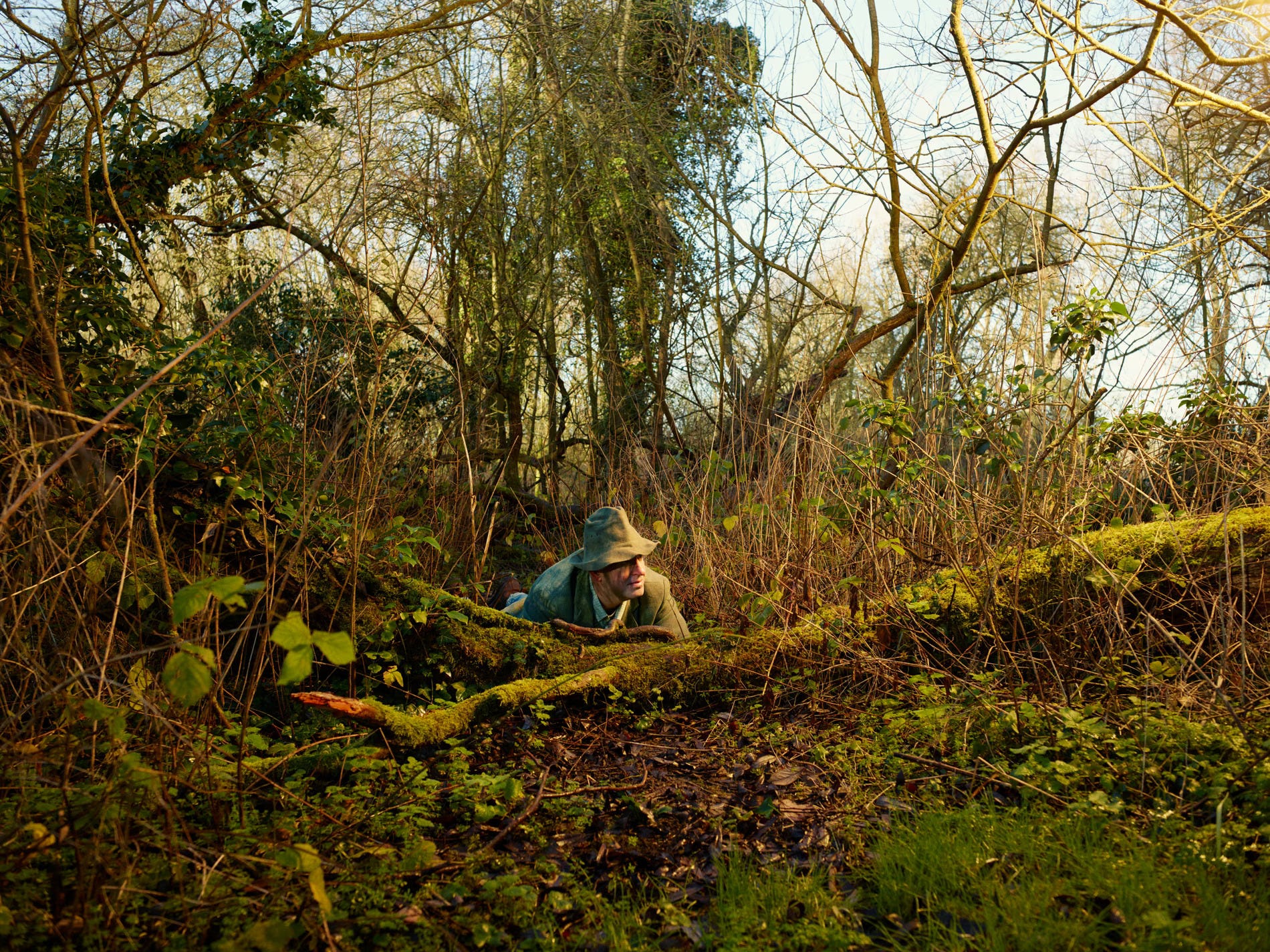
What fascinated me was that none of the participants claimed to have become another animal. In fact, the value of the work seemed to lie precisely in acknowledging that they could not. By temporarily reorganising their attention, they began noticing features of the landscape that ordinarily disappeared beneath habitual human perception.
Railway lines became continual sources of vibration rather than transport infrastructure.
Public footpaths ceased to represent leisure and instead became corridors through which dogs repeatedly disturbed resting and hunting territories.
Even conservation interventions, such as fish passes, appeared differently when considered from the perspective of exhausted salmon already at the limits of survival. The performance had not granted access to another creature’s consciousness. It had simply made the familiar world unfamiliar again.
That distinction feels crucial because it shifts the purpose of embodiment itself.
Performance does not necessarily function as a bridge into another species’ inner life. Instead, it interrupts the assumptions through which we normally encounter our own environment. We leave knowing less about what it feels like to be an otter than we do about how narrowly we usually inhabit the world ourselves. The exercise becomes an act of perceptual reorganisation rather than biological imitation.
This reminded me of something I wrote in my previous newsletter when reflecting on Grotowski. His work suggested that embodiment is less about pretending than encounter, about allowing the body to become a site of genuine experience rather than representation.
Reading about the Somerset project complicated that thought further.
Perhaps encounter itself is not the destination.
Perhaps the real value lies in allowing performance to expose the limits of what we can know, while simultaneously expanding what we are prepared to notice.
The impossibility of becoming an animal
At the same time, the project raises an uncomfortable question. Does acting like an earthworm genuinely help us understand an earthworm, or does it merely expose the limits of human imagination?
There is something inherently absurd about watching a human being attempt to inhabit the life of a worm. That absurdity can easily become comedy. The more seriously someone commits to wriggling through soil, the more an audience may become aware of the impossibility of the task itself. Yet I am increasingly convinced that the laughter itself deserves attention. Humour is not necessarily a problem. It matters where the joke lands.
I found myself thinking about this while revisiting Les Moutons by CORPUS Dance Projects, a wordless outdoor performance in which dancers inhabit the rhythms and behaviours of sheep. It is an interesting piece of work, accessible, playful and often comedic. Audiences immediately recognise the flock, laugh with it, move around it and frequently become part of its unfolding choreography. The production demonstrates that animal embodiment can flourish far beyond conventional theatre buildings, inviting strangers into an encounter with another species through movement rather than language.

Yet what interests me is not whether the sheep are convincing. It is where spectators’ attention ultimately settles. Sometimes the performance seems to invite a renewed attentiveness towards sheep themselves, their sociality, vulnerability and collective movement. At other moments it risks drifting back towards the novelty of watching humans behave like animals.
Those responses are not mutually exclusive, but they carry different political consequences.
One gently unsettles the boundary between human and nonhuman life. The other reinforces it by suggesting that animality remains amusing precisely because it is something humans temporarily descend into before returning safely to themselves.
Perhaps that uncertainty is not a flaw in the work but its central political problem. Animal imitation does not automatically dismantle anthropocentrism. Under certain conditions it may reproduce it.
If audiences leave laughing because sheep appear foolish, then the hierarchy remains intact.
If they leave laughing because human dignity itself has begun to look strangely fragile, then something much more interesting has happened.
The same performance can open radically different ethical possibilities depending on how it is framed, contextualised and received.
Animals already perform
Huling’s essay complicated these questions even further because it begins from an entirely different premise. Rather than asking whether humans can represent nonhuman animals, it asks us to recognise that animals already inhabit social and cultural worlds of their own.
Chimpanzees transmit traditions of tool use across generations. Sperm whales communicate through group-specific dialects. Bighorn sheep inherit migratory routes. Elephants pass down ecological knowledge, while birds learn regionally distinctive songs and methods of nest construction. Increasingly, these behaviours are understood not merely as instinct but as culture.
I found that profoundly significant because it changes the starting point of performance itself.
Too often discussions of animal representation assume that humans possess culture while animals provide its subjects. Yet if other animals already participate in socially learned, collectively maintained and historically transmitted forms of life, then the relationship begins to shift.
Animals are not blank biological bodies awaiting human interpretation. They are already cultural beings. They inherit traditions, participate in rituals, negotiate relationships and develop collective histories that exist entirely independently of us.
There is, I think, a crucial distinction here between performing an animal and recognising animal performance.
The first begins with a human attempt to embody another species.
The second begins by acknowledging that animals already participate in meaningful, repeated and socially significant acts long before humans arrive to observe them.
A blackbuck courtship display is not theatre in the institutional sense, but neither is it meaningless behaviour. It involves display, repetition, audience, learned convention and consequence. Chimpanzee rain dances, whale songs and birdsong traditions similarly resist easy separation between behaviour and culture. Animals are not waiting backstage for humans to perform them. They have been performing all along.
Embodiment as disturbance
Returning to these projects, I am increasingly convinced that embodiment is valuable precisely because it fails to deliver what it appears to promise.
No performer can become an earthworm. No amount of scientific knowledge, physical commitment or theatrical skill grants access to another creature’s consciousness. Human bodies remain shaped by human anatomy, language, memory and culture. We carry our own sensory worlds with us wherever we go.
For a long time I assumed this limitation weakened attempts at nonhuman animal embodiment. Increasingly, however, I wonder whether it is exactly where their ethical force resides.
The Somerset participants were not discovering what it feels like to be salmon or kestrels. Instead, they were discovering the assumptions embedded within their own habits of perception.
The performance did not reveal the nonhuman animal from within. It exposed the human from without. It interrupted ordinary ways of moving through landscapes and asked participants to attend to features of the world they would otherwise overlook.
This feels like an important distinction because it reframes the purpose of performance itself. Rather than functioning as a machine for producing empathy through identification, embodiment becomes a practice of perceptual disturbance. The performer does not leave believing they understand another species completely. They leave less certain that their own perspective was ever complete to begin with.
Perhaps this is where performance differs from explanation. Scientific research can tell us that salmon expend enormous amounts of energy navigating fish passes.
Performance allows us to experience something of exhaustion, resistance and vulnerability in our own bodies. The experience remains human, but it has been reorganised through an encounter with another form of life. Knowledge becomes embodied without claiming ownership over the animal’s experience.
A common animality
This also returns me to a question that has appeared throughout many of these newsletters: what do we actually mean when we talk about shared animality?
I don’t think it can mean sameness. The temptation to collapse all species into a single undifferentiated category risks erasing precisely the diversity we are trying to acknowledge.
An otter does not perceive a river as I do.
A kestrel does not read a landscape as I do.
An earthworm does not inhabit soil as I do.
Even individuals within the same species encounter the world differently according to age, experience, health and social relationships.
Yet neither does recognising difference require us to imagine an absolute gulf between ourselves and every other animal.
Perhaps shared animality lies elsewhere. Hunger, pleasure, fear, fatigue, touch, dependency, curiosity, attachment, vulnerability and mortality are not uniquely human experiences. They emerge differently through different bodies and environments, but they remain conditions of living. They pass through species rather than belonging exclusively to one.
Performance may be uniquely placed to explore this common ground because it works through bodies rather than propositions. A performer cannot become a sheep, but they can experience the vulnerability of exposure, the repetition of collective movement, the dependence of flocking, or the unsettling experience of being handled by another body. None of these moments claims to reproduce sheep consciousness. Instead, they create encounters with conditions that both connect and distinguish forms of nonhuman animal life.
What emerges is not identity but proximity.
That feels like a more honest ambition.
The value of failure
Perhaps, then, the failure of nonhuman animal embodiment is not a problem waiting to be solved. Perhaps it is the work.
The performer never disappears into the sheep.
The earthworm remains beyond reach.
The costume remains recognisably a costume.
Another nonhuman animal’s world continually exceeds our attempts to represent it, and I think that excess matters. It reminds us that nonhuman lives cannot simply be possessed through empathy, imagination or theatrical technique.
There is always something that escapes us.
At the same time, however, the failed transformation exposes another truth.
The performer never stops being an animal either.
That observation feels deceptively simple, but I think it carries considerable political weight. Much of Western thought has been built upon separating “the human” from “the animal”, as though these were mutually exclusive categories. Nonhuman animal embodiment refuses that certainty.
The performer cannot become entirely nonhuman, yet neither can they convincingly occupy a position outside animal existence altogether.
The performance leaves the body suspended somewhere between difference and continuity.
Increasingly, I find myself thinking that this unstable position is precisely where performance becomes most interesting. The aim is not to erase the profound differences between species, nor to use animals merely as metaphors through which humans learn about themselves. It is to inhabit, however briefly, the uncertain ground where human exceptionalism begins to loosen its grip.
Perhaps this is what I have been circling throughout these newsletters without quite naming it.
Performance cannot make me an otter.
It cannot make me a sheep.
It cannot make me an earthworm.
What it can do is make it more difficult to return to the comforting fiction that I stand outside nonhuman animal life altogether.
That strikes me as a quieter ambition than empathy, but perhaps a more enduring one. Rather than promising impossible access to another creature’s consciousness, performance cultivates humility. It reminds us that other animals will always exceed our understanding, while simultaneously revealing that our own humanity has never been as separate from theirs as we often imagine.
If that is all embodiment achieves, it has already achieved something rather remarkable.