

The last fortnight has taken me across three countries, a conference, a festival, a night train with an unfortunate cold, and countless conversations that have left me feeling hopeful.
Looking back, what surprises me most is that each experience, despite appearing completely unrelated, was asking the same question: what happens when we allow ourselves to experiment? Not simply with art, but with advocacy, education, and the ways we invite people into relationships with nonhuman animals.
I’ve written in the past that the animal movement has become extraordinarily good at documenting suffering. We know how to investigate, campaign, lobby, and produce evidence. Those approaches remain vital and continue to achieve remarkable things. Yet increasingly I find myself wondering whether we spend enough time experimenting. Not because experimentation is inherently radical or valuable in itself, but because imagination needs spaces where uncertainty is welcomed and where new possibilities can emerge.
A pocket of utopia
The first of those spaces was the Arten Festival in Zurich, Switzerland. I’m not sure I’ve experienced anything quite like it. For two days, an animal sanctuary became something between an art gallery, a theatre festival, a music venue, and a place of quiet ritual. Artists, performers, musicians, writers, and activists gathered around a shared question of how we might live differently alongside other animals.
There were dancers working with horses, poetry readings accompanied by ducks and hens wandering freely through the audience, intimate acoustic concerts amongst rescued animals, sound installations hidden within gardens, murals emerging throughout the weekend, rituals of mourning with pigs, silent discos, spider-inspired performances, an interspecies drag show by Soya the Cow, and countless conversations that spilled into shared meals and late evenings. Much of it was unmistakably experimental. Some works resonated more deeply than others, but that almost felt beside the point. Everywhere I looked, artists were testing ideas, searching for new forms, and asking what abolitionist art might become if we allowed ourselves to think beyond familiar conventions.
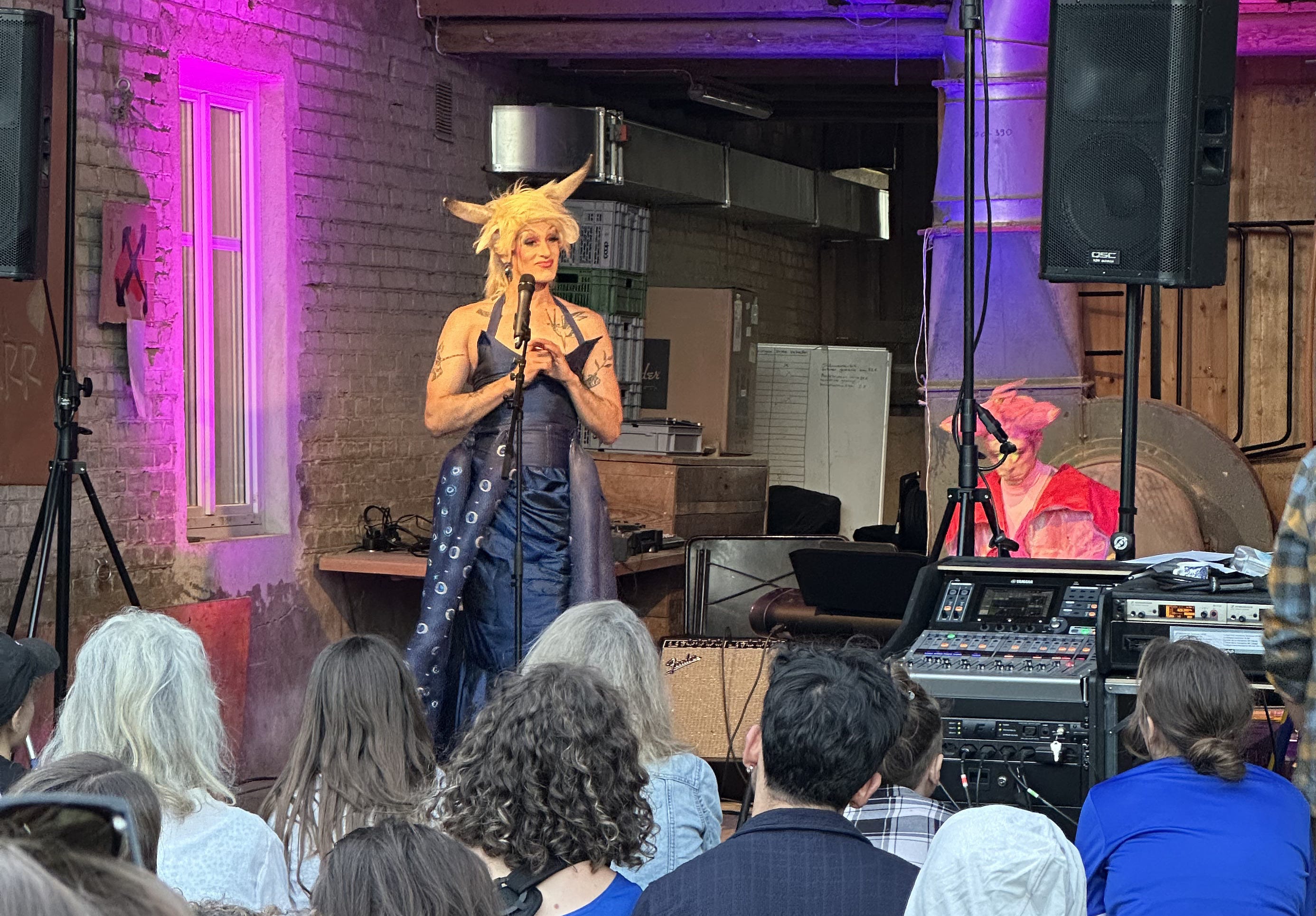
The atmosphere was unlike anything I’d encountered before. The food was incredible, the weather glorious, and the people endlessly generous with both their time and curiosity. It genuinely felt like a small pocket of utopia, a temporary community where creativity and animal liberation weren’t parallel conversations but one and the same.
What the bacon became
Theres Indermaur and I contributed an installation called Before It Arrives: A gentler world is being imagined. At its centre sat an enormous inflatable rasher of bacon. When we first inflated it in the middle of the sanctuary, the juxtaposition felt deliberately uncomfortable. Here was one of the most recognisable symbols of industrial animal exploitation sitting amongst rescued animals who had escaped precisely that system.
Yet it didn’t remain a symbol of violence for long.
Within minutes people had begun writing across its surface. They painted messages, drew pictures, left hopes for the future, and children climbed onto it with complete abandon. Families gathered around it. Conversations began. What had initially represented consumption slowly became something altogether different, a communal artwork shaped by hundreds of individual contributions. By the end of the festival I no longer saw bacon. I saw imagination. I saw people collectively rehearsing a gentler world.
The closing moment affected me more than I expected. Together we gradually deflated the sculpture. People gathered around it, some sitting gently on its surface to help release the air while everyone breathed together, slowly inhaling and exhaling in unison as the bacon collapsed back into itself.


There was no grand statement. Just a shared act of care and attention.
Watching this enormous symbol of industrial domination quietly disappear whilst surrounded by people imagining something kinder felt profound. It struck me that the installation had never really been about bacon at all. It had become a space for participation. A place where people could quite literally inscribe their hopes onto a symbol of oppression and watch it transform into something hopeful. For a few moments, the future felt one step closer.
Finding new language
A few days later I boarded the night train to Lithuania, battling a rather unpleasant cold (encouraged by the sleepless England vs Mexico game), and arrived in Vilnius for the University Theatre World Congress. The atmosphere could hardly have been more different. Theatre educators and researchers from across the world had gathered to discuss the role of performance in responding to global crises. Climate change appeared throughout the programme. Covid continued to shape many conversations. Ecological collapse was rightly acknowledged as an urgent concern.
Animals, however, were rarely mentioned.
So I presented Zooclasm as a dramaturgical framework for theatre education, arguing that if performance is serious about responding to ecological and ethical crises, then nonhuman animals cannot remain peripheral to those conversations.
The discussion afterwards was generous, thoughtful, and challenging. There were important questions about whether anthropocentrism remains a useful critical term, and whether posthumanism already offers sufficient conceptual tools. Those conversations reinforced exactly why I have been developing Zooclasm. Both anthropocentrism and posthumanism have made invaluable contributions, but I continue to feel the need for a framework that places nonhuman liberation, rather than philosophical description, at its centre. Zooclasm is my attempt to move that conversation from interpretation towards practice, from describing the world as it is to asking how theatre might help reshape it.
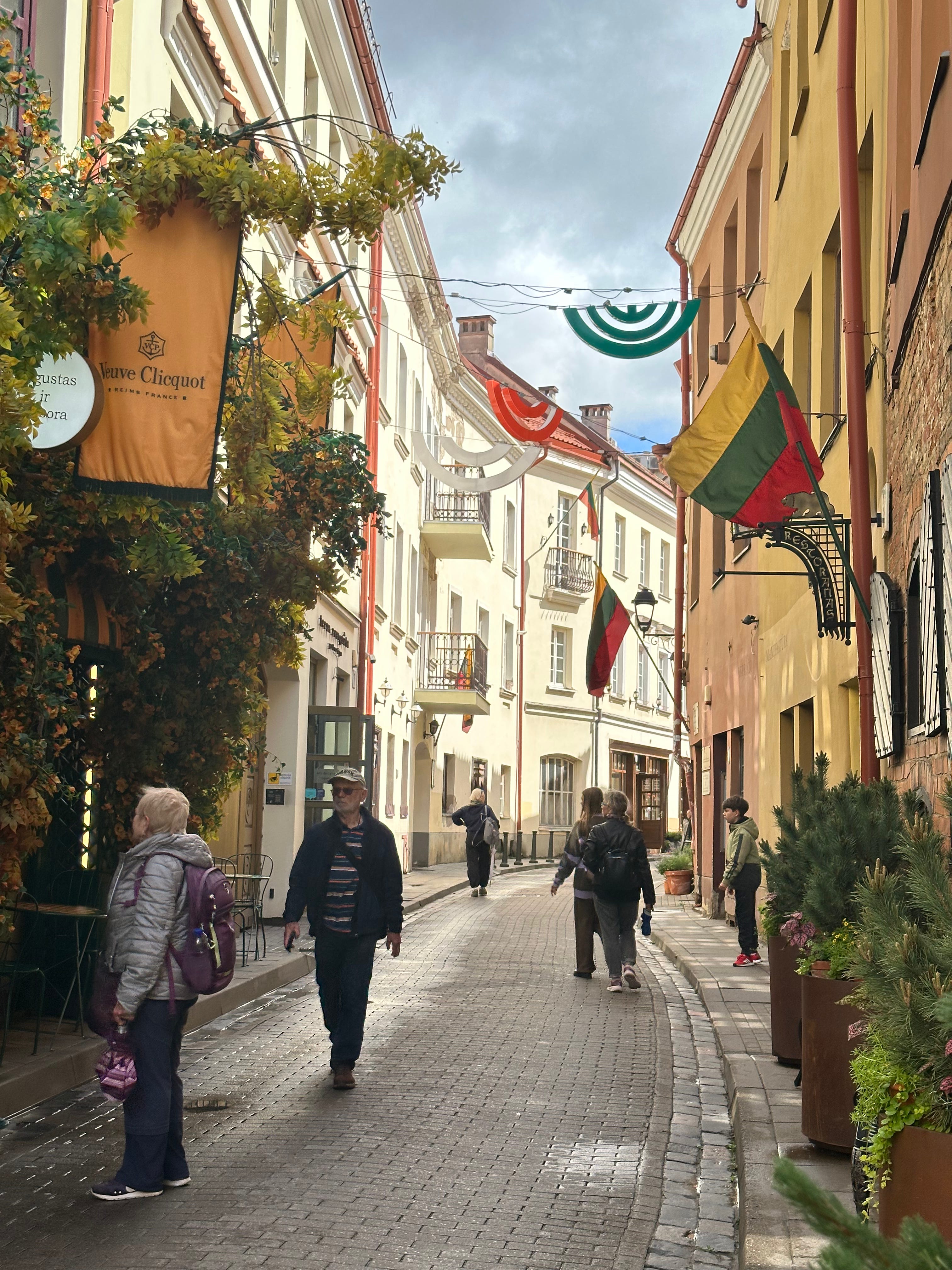
I left encouraged, not because everyone agreed, but because animals had entered a conversation where they had previously been almost invisible. That felt worth the journey alone.
Listening differently
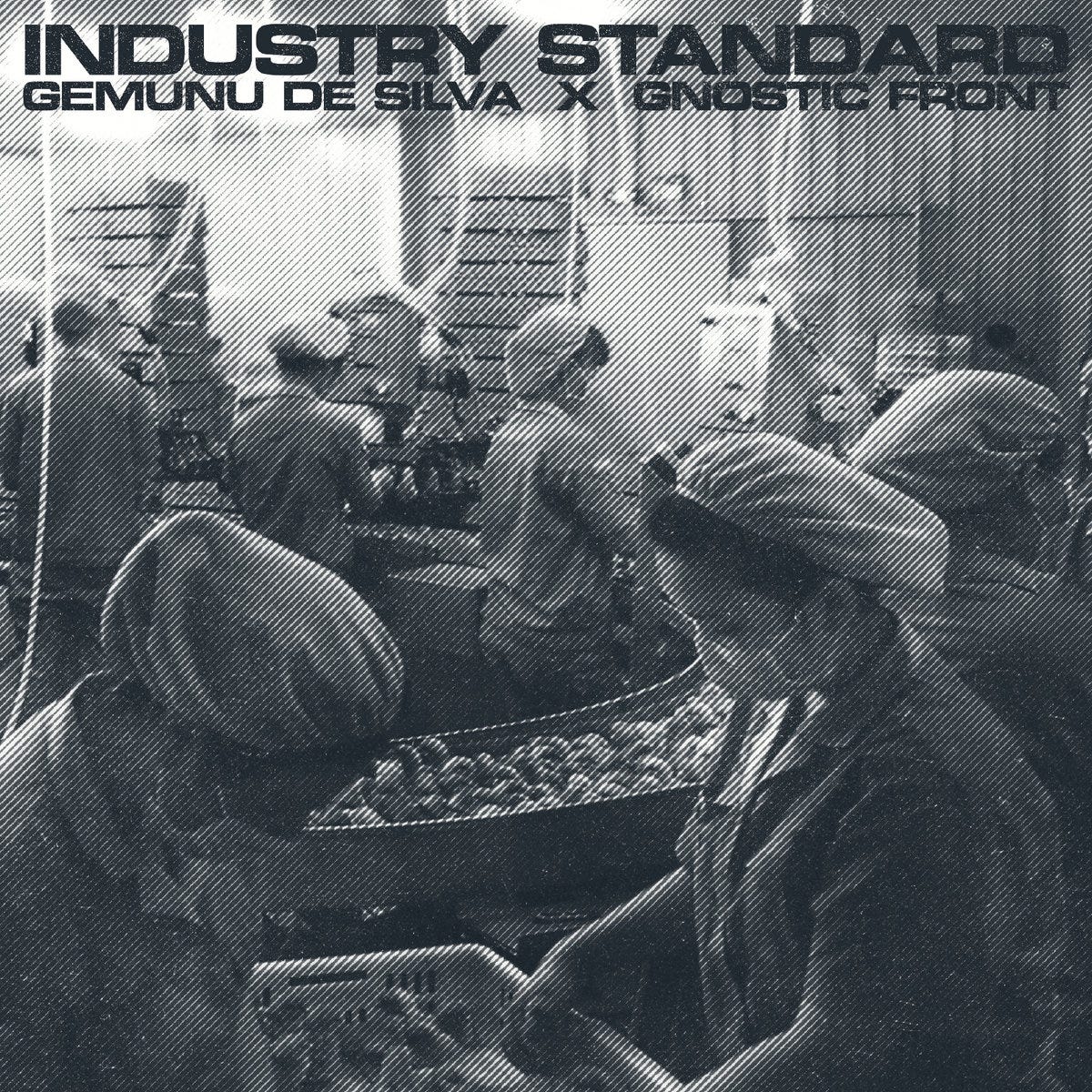
On the journey home I published my latest podcast conversation with undercover investigator Gemunu de Silva, exploring his remarkable collaboration with Gnostic Front on Industry Standard, an experimental sonic artwork built entirely from decades of field recordings gathered inside animal industries. Throughout our conversation we returned repeatedly to the same idea: advocacy does not always have to look the way we expect it to.
Sometimes it sounds different.
Sometimes it asks us to listen rather than watch.
Sometimes it slows us down enough to encounter suffering in entirely new ways.
Gemunu spoke beautifully about wanting to move beyond familiar campaigning formats and explore the creative possibilities that emerge when sound itself becomes a form of advocacy. It reminded me that experimentation is not about abandoning what already works, but about discovering emotional registers and audiences that conventional advocacy sometimes struggles to reach.
If you’d like to listen to our conversation, you can find it here:
performinganimalrights.org/podcast
Why movements need experiments
Reflecting on these experiences together, I realise they all point towards the same conviction.
None of them rejects traditional advocacy. But movements also need laboratories. They need places where artists are free to fail, where educators can propose unfamiliar frameworks, where musicians can transform evidence into sound, and where an inflatable rasher of bacon can become an invitation to imagine liberation.
Not every experiment will succeed, nor should it. Progress has rarely emerged from certainty alone. It grows through curiosity, through risk, and through creative attempts to communicate differently. Sometimes those attempts fail. Occasionally they surprise us. Every so often they create moments of connection that statistics, reports, and policy papers simply cannot.
As I travelled home, exhausted but energised, I found myself feeling quietly optimistic. Across Europe I had encountered artists, educators, musicians, and activists who were refusing to accept that the existing languages of advocacy are the only ones available to us. They were building installations, composing music, developing new pedagogies, and reimagining theatre, all in service of creating richer relationships between humans and other animals.
None of us knows exactly where these experiments will lead.
Perhaps that’s precisely the point.
If we are serious about building a more compassionate future, then we also have to become serious about imagining it.
The Zurich event sounds so moving, and Gem’s perspective on sonic art is inspiring. A great piece full of hope. Thank you!
Great report. Thank you. When you are next in Zurich, please visit the offices of Tier im Recht to meet their excellent staff and peruse their outstanding animal law and ethics library.